
Blueberry Lemon Sourdough Bread-Easy Delicious Recipe
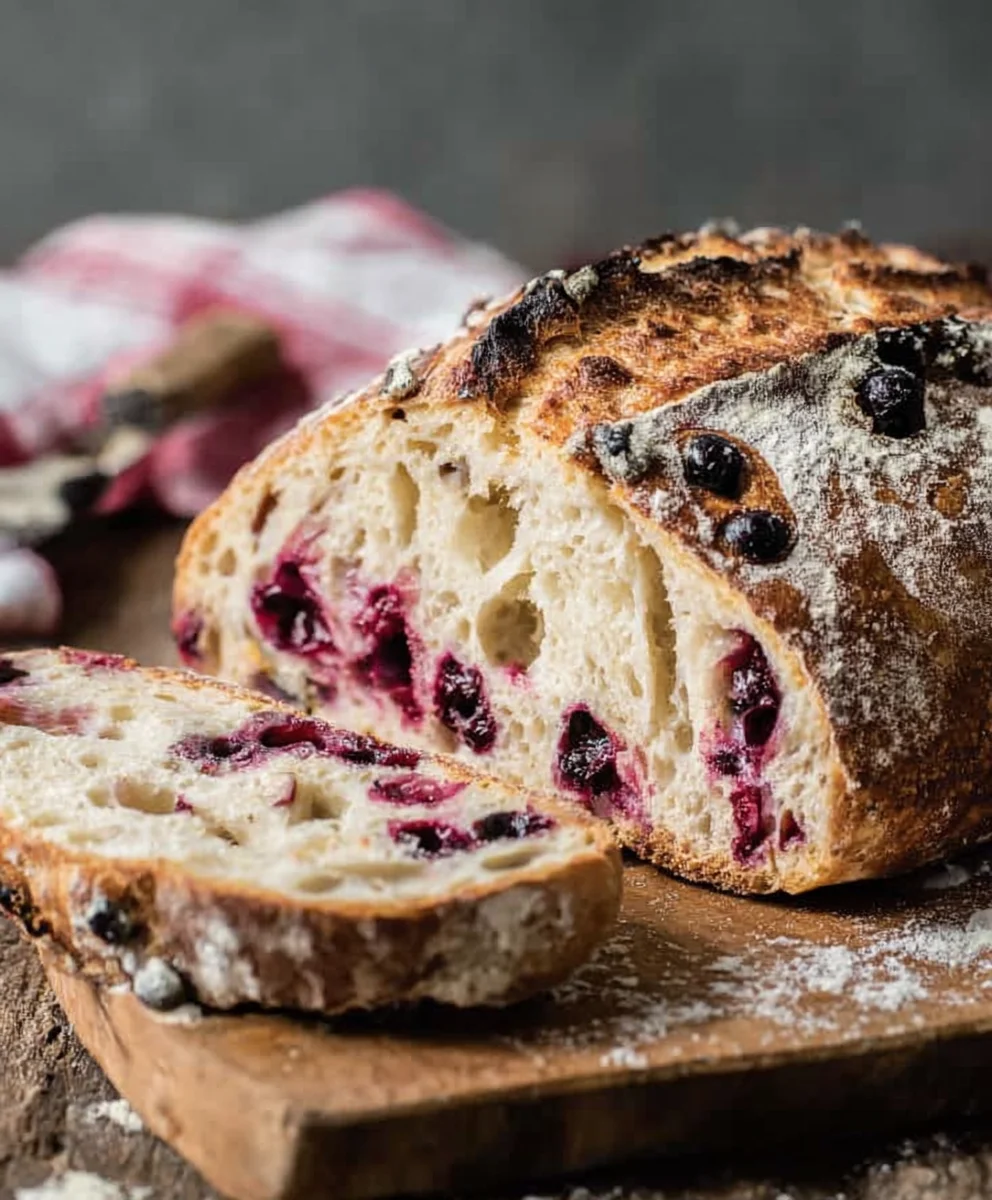
Blueberry Lemon Sourdough Bread. The very thought of it conjures up sunshine, warm kitchens, and the irresistible aroma of sweet berries mingling with bright citrus. It’s a flavor combination that just works, isn’t it? There’s something incredibly comforting and yet surprisingly sophisticated about this particular loaf. People adore it because it takes the beloved tang and chewy texture of sourdough and elevates it with a burst of fruity sweetness and a zesty punch. It’s more than just bread; it’s an experience. What truly makes Blueberry Lemon Sourdough Bread special is the magical interplay of these distinct notes. The natural fermentation of the sourdough starter provides a subtle, complex sourness that perfectly balances the intense sweetness of plump blueberries, while the lemon zest cuts through it all, adding a vibrant, refreshing lift that keeps every bite exciting and light. Get ready to transform your baking routine with this delightful recipe.
Ingredients:
- 3 cups bread flour
- 1⅓ cups lukewarm water
- ¾ cup active, bubbly, and well-fed sourdough starter
- 3 tablespoons white sugar
- 1 teaspoon salt
- 1¼ cup fresh blueberries
- 1 tablespoon lemon zest
Sourdough Base and First Mix
Preparing the Dough
Let’s get started on our delicious Blueberry Lemon Sourdough Bread. The first step is to ensure your sourdough starter is active and ready to go. A good sign of an active starter is that it’s bubbly and has increased in volume since its last feeding. This lively starter is crucial for the bread’s rise and signature tangy flavor.
In a large mixing bowl, combine the lukewarm water and your active sourdough starter. Give it a gentle stir to help the starter begin extract to dissolve into the water. Now, add the bread flour to this mixture. Don’t worry about mixing too thoroughly at this stage; we’re just aiming to hydrate the flour.
Using your hands or a sturdy spatula, mix everything together until no dry flour remains. The dough will be shaggy and quite sticky. This is perfectly normal for a sourdough bread at this initial stage. Cover the bowl with plastic wrap or a damp kitchen towel and let it rest for about 30 minutes. This resting period is called autolyse, and it allows the flour to fully absorb the water, which in turn helps develop the gluten structure without excessive kneading.
Developing the Dough and Incorporating Flavors
The Stretch and Fold Technique
After the 30-minute autolyse, it’s time to add the remaining ingredientgin extractnd begin developing the dough’s structure through a series of “stretch and folds.” Add the white sugar and salt to the dough. The sugar will not only add a touch of sweetness but also helps to feed the yeast in your starter, contributing to a better rise and a softer crum extractb. The salt is essential for flavor and also helps to control the fermentation process and strengthen the gluten.
Now, we’ll perform the first set of stretch and folds. Wet your hands slightly to prevent sticking. Grab one side of the dough, stretch it upwards gently, and fold it over onto itself. Rotate the bowl a quarter turn and repeat this process three more times, until you’ve stretched and folded all four sides of the dough. This technique is much gentler than traditional kneading and is ideal for sourdough, as it helps build strength and elasticity in the dough without overworking it.
Cover the bowl again and let it rest for another 30 minutes. Repeat this stretch and fold process a total of four times, with 30-minute rests in between each set. As you continue with the stretch and folds, you’ll notice the dough becoming smoother, more elastic, and less sticky. It will start to hold its shape better after each fold, indicating that the gluten network is developing nicely.
Adding the Blueberry and Lemon Zest
Infusing the Flavor
Once you’ve completed your series of stretch and folds and the dough has reached a good level of elasticity, it’s time to introduce the star flavors: blueberries and lemon zest. Gently scatter the fresh blueberries and the finely grated lemon zest over the surface of the dough.
For this step, it’s important to be gentle to avoid bruising the blueberries too much, which can lead to them bleeding their color excessively into the dough. We want pockets of vibrant blue throughout. Now, carefully fold the dough over the blueberries and zest, and perform one final set of gentle stretch and folds to distribute them as evenly as possible. You might need to do a few extra folds to ensure they are well incorporated, but try not to tear the dough.
After incorporating the blueberries and lemon zest, cover the bowl once more and let the dough rest for a final 30 minutes. This allows the flavors to start mingling and the dough to relax before its bulk fermentation.
Bulk Fermentation and Shaping
The Rise of the Dough
Now comes the bulk fermentation stage, where the dough will rest and rise at room temperature. This can take anywhere from 4 to 8 hours, depending on the ambient temperature of your kitchen. The warmer it is, the faster it will ferment. You’re looking for the dough to increase in volume by about 50-75% and to become noticeably lighter and airier. You might see some large bubbles appearing on the surface.
Once the bulk fermentation is complete, it’s time to shape your loaf. Lightly flour your work surface and gently tip the dough out of the bowl. Be careful not to deflate it too much. You can use a bench scraper to help you. Gently shape the dough into your desired loaf form – either a round boule or an oblong batard. The goal is to create surface tension by tucking the dough under itself, forming a taut skin on the top.
Place the shaped dough seam-side up into a floured proofing basket (banneton) or a bowl lined with a floured kitchen towel. Cover it loosely with plastic wrap or a damp towel.
Cold Proofing and Baking
Developing Deep Flavor
For the best flavor development and easier handling, we’re going to cold proof the dough in the refrigerator. Place the covered dough in the refrigerator for at least 12 hours, or up to 24 hours. This slow, cold fermentation allows the complex sourdough flavors to develop further and makes the dough firmer, which is ideal for scoring and baking.
When you’re ready to bake, preheat your oven to 475°F (245°C) with a Dutch oven or baking stone inside. If using a Dutch oven, preheat it for at least 30 minutes. Carefully take the dough out of the refrigerator. If using a Dutch oven, gently invert the dough directly into the hot Dutch oven. If using a baking stone, invert the dough onto parchment paper and then carefully slide the parchment paper with the dough onto the hot stone.
Using a sharp knife or a lame, score the top of the dough. This allows the bread to expand in a controlled way during baking. You can make a simple cross, a single slash, or a more decorative pattern. Cover the Dutch oven with its lid (or if using a baking stone, loosely tent the dough with foil) and bake for 20 minutes.
After 20 minutes, remove the lid from the Dutch oven (or remove the foil tent). Reduce the oven temperature to 450°F (230°C) and continue to bake for another 20-25 minutes, or until the crust is a deep golden brown and the internal temperature of the bread reaches around 200-210°F (93-99°C). The aroma of blueberry and lemon will be incredible!
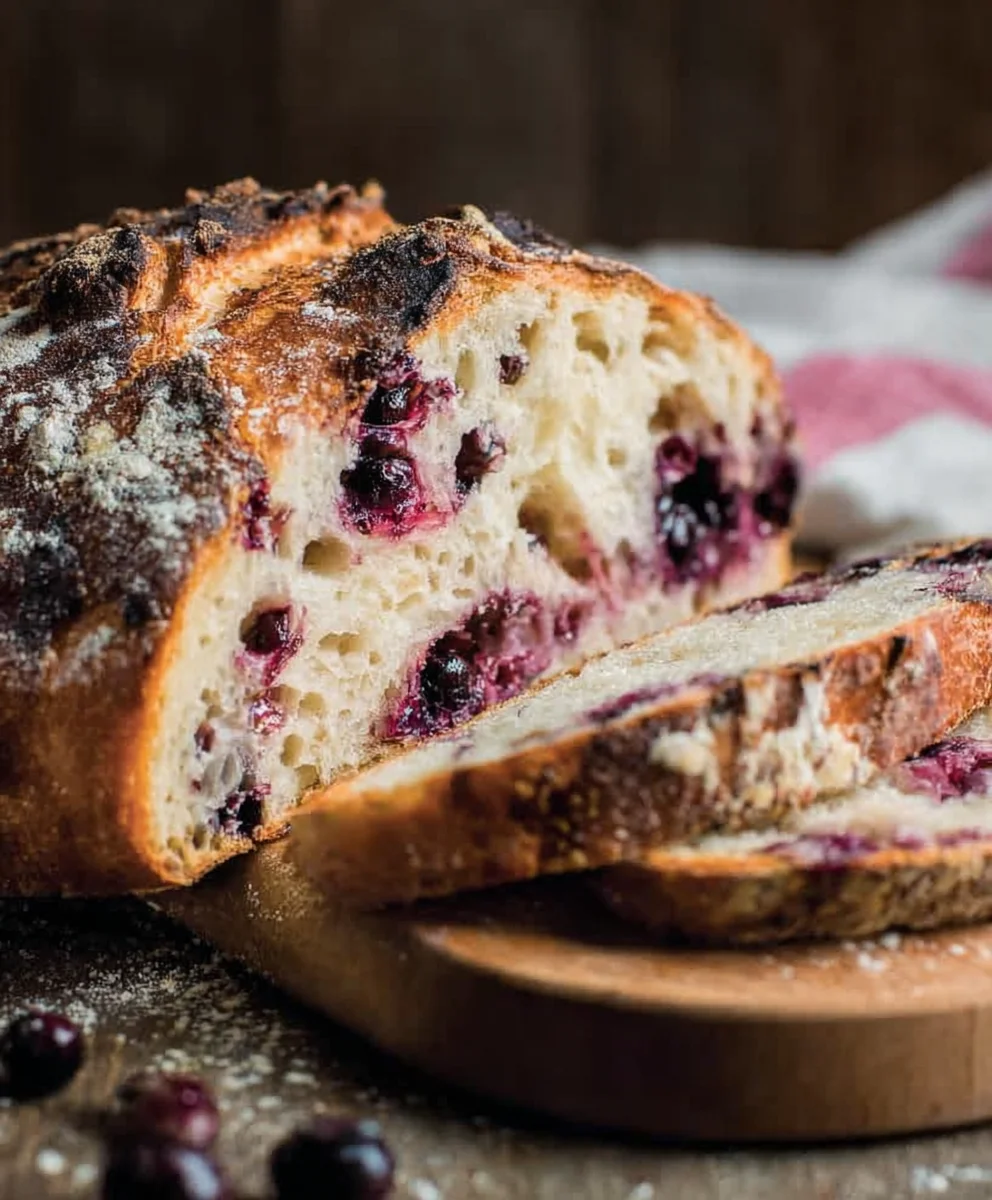
Once baked, carefully remove the bread from the oven and transfer it to a wire rack to cool completely. Resist the temptation to slice into it too early; allowing it to cool fully ensurrum extractthe crumb sets properly and the flavors meld. Enjoy your beautiful homemade Blueberry Lemon Sourdough Bread!
Conclusion:
I hope you’ve enjoyed learning how to create this delightful Blueberry Lemon Sourdough Bread. This recipe combines the tangy richness of sourdough with the bright, zesty notes of lemon and the sweet burst of blueberries, resulting in a loaf that’s both comforting and uniquely flavorful. It’s the perfect treat for breakfast, brunch, or a special afternoon snack.
For serving suggestions, this Blueberry Lemon Sourdough Bread is absolutely wonderful toasted and slathered with a generous amount of butter or cream cheese. It also pairs beautifully with a dollop of Greek yogurt and a drizzle of honey, or served alongside a fresh fruit salad. If you’re feeling adventurous with variations, consider adding a touch of lavender for an extra floral aroma, or substituting some of the blueberries with raspberries for a different berry profile. You can also experiment with a hint of cardamom for warmth. Don’t be afraid to adapt this recipe to your personal taste!
Baking with sourdough can seem daunting at first, but with a little practice and patience, you’ll be rewarded with incredible results like this Blueberry Lemon Sourdough Bread. I encourage you to give it a try and discover the magic of homemade sourdough. Happy baking!
Frequently Asked Questions:
Q: Can I use frozen blueberries instead of fresh ones in the Blueberry Lemon Sourdough Bread?
A: Yes, you can absolutely use frozen blueberries! It’s often recommended to toss them with a tablespoon of flour before adding them to the dough to help prevent them from bleeding too much color. You don’t need to thaw them beforehand.
Q: My sourdough starter isn’t very active. Will this affect my Blueberry Lemon Sourdough Bread?
A: A vigorous and active sourdough starter is crucial for a good rise and tangy flavor in your Blueberry Lemon Sourdough Bread. If your starter is sluggish, I recommend feeding it regularly for a few days to boost its activity before you begin extract this recipe. A well-fed starter will give you the best results.
Blueberry Lemon Sourdough Bread
An easy and delicious recipe for homemade Blueberry Lemon Sourdough Bread, featuring a tangy sourdough base infused with fresh blueberries and bright lemon zest.
Ingredients
-
3 cups bread flour
-
1⅓ cups lukewarm water
-
¾ cup active, bubbly, and well-fed sourdough starter
-
3 tablespoons white sugar
-
1 teaspoon salt
-
1¼ cup fresh blueberries
-
1 tablespoon lemon zest
Instructions
-
Step 1
Combine lukewarm water and active sourdough starter in a large bowl. Add bread flour and mix until no dry flour remains, creating a shaggy dough. Cover and let rest for 30 minutes (autolyse). -
Step 2
Add white sugar and salt. Perform a series of ‘stretch and folds’ by wetting hands, stretching one side of the dough up, and folding it over. Repeat four times, rotating the bowl. Rest for 30 minutes. Repeat this stretch and fold process a total of four times with 30-minute rests in between. -
Step 3
Gently scatter fresh blueberries and lemon zest over the dough. Fold the dough over the inclusions and perform final gentle stretch and folds to distribute them evenly. Cover and let rest for 30 minutes. -
Step 4
Allow the dough to bulk ferment at room temperature for 4-8 hours, or until it increases in volume by 50-75% and becomes airy. Gently shape the dough into a boule or batard, creating surface tension. Place seam-side up into a floured proofing basket or lined bowl, cover loosely. -
Step 5
Cold proof the dough in the refrigerator for at least 12 hours, up to 24 hours. Preheat oven to 475°F (245°C) with a Dutch oven or baking stone inside. Score the top of the dough. Bake covered (Dutch oven lid or foil tent) for 20 minutes. -
Step 6
Remove the lid/tent, reduce oven temperature to 450°F (230°C), and bake for another 20-25 minutes until deep golden brown and internal temperature reaches 200-210°F (93-99°C). Cool completely on a wire rack before slicing.
Important Information
Nutrition Facts (Per Serving)
It is important to consider this information as approximate and not to use it as definitive health advice.
Allergy Information
Please check ingredients for potential allergens and consult a health professional if in doubt.